


Bricklayer Apprenticeship Level 2
Attendance: Full Time
Course code: AP0083
The construction sector is the driving force behind the UK economy, employing three million people and contributing 6.4% of GDP. Not only that, the construction industry is central to delivering the homes, schools, hospitals, energy and transport infrastructure our society demands. Bricklaying is a core function within the construction sector, particularly the house building sector. The Government has a target to build significantly more new homes over the coming years and therefore the demand for bricklayers has never been higher.The range of sites and projects that bricklayers will work on include large commercial developments, new build housing, alterations, extensions and restorations. Bricklayers lay bricks, blocks and other types of building components in mortar to construct and repair walls, foundations, partitions, arches and other structures eg chimney stacks. They might also refurbish brickwork and masonry on restoration projects. A bricklayer may work one-on-one or on larger jobs where their bricklaying group (gang) may work on a particular section of a building alongside other bricklaying gangs as well as other trades.
Course details
Entry Requirements: Determined by employer
What will I learn? CORE KNOWLEDGE, SKILLS, AND BEHAVIOUR REQUIREMENTS KNOWLEDGE Apprentices will develop knowledge in: Health and Safety: Understanding hazards, regulations (COSHH, risk assessments), method statements, PPE, and asbestos awareness. Customer Service: Principles of high-quality service, establishing needs, respecting the working environment, and building a good reputation in the industry. Communication: Clear, articulate communication; adapting style to different situations. Buildings: Knowledge of different eras, construction methods, insulation, sustainability, and fire/moisture protection. Energy Efficiency: Understanding thermal qualities, airtightness, and ventilation in buildings. Materials: Types of materials, their uses, cost awareness, environmental considerations, and waste management. Alternative Construction Techniques: Modern construction methods, rapid build technology, alternative cladding systems. Radial and Battered Brickwork: Set out and build brickwork, including arches, concave/convex, and battered brickwork. Feature and Reinforced Brickwork: Set out and build complex features, including angles, quoins, and reinforced structures. Fireplaces and Chimneys: Selecting materials to build fireplaces and chimneys with hearths, flue liners, and chimney pots. SKILLS Apprentices will gain skills in: Prepare Materials: Determine quality and quantities of materials, including mortar and concrete mix ratios. Work Safely: Adhere to health and safety laws and practices, especially when working at heights and using power tools. Working Area: Select appropriate tools (trowels, levels, insulation, mixers, etc.), maintain a clean workspace. Masonry Structures: Interpret drawings, set out levels for brick courses, apply mortar, and use tools like laser levels, spirit levels, and string lines to ensure accurate masonry. Radial and Battered Brickwork: Build simple arches and curved brickwork. Feature and Reinforced Brickwork: Build decorative features like oversailing courses, corbels, and reinforced brickwork. Other Brickwork: Block laying, cavity walling with openings, and brick inspection chambers. Building Technology: Select materials and resources for laying concrete, drainage, and substructure materials BEHAVIOURS Apprentices will demonstrate the following behaviours: Positive and Mature Attitude: Be conscientious, punctual, enthusiastic, reliable, and professional. Take responsibility for personal judgements and actions, be aware of competence limits, and show honesty and integrity. Quality-Focused: Be efficient, reliable, and quality-focused in work. Consider the impact of actions on other trades and maintain a clean work area. Provide good customer service, and use resources responsibly with an awareness of environmental, social, and economic factors. Effective Communication: Communicate effectively using oral, written, and body language, collaborating with colleagues, clients, architects, and other trades in a respectful manner. Self-Motivated Learner: Take initiative in identifying personal development needs, keep up-to-date with best practices, and demonstrate the ability to work independently and solve problems through seeking critical information.
How will I be assessed? A qualified assessor will provide an induction and regular workplace assessments
What can I do next? Full-time employment in the sector

Can’t find any apprenticeship vacancies?
Just fill in the registration form below and we’ll let you know when more Apprenticeship vacancies become available.

Discover what life’s like at City of Wolverhampton College
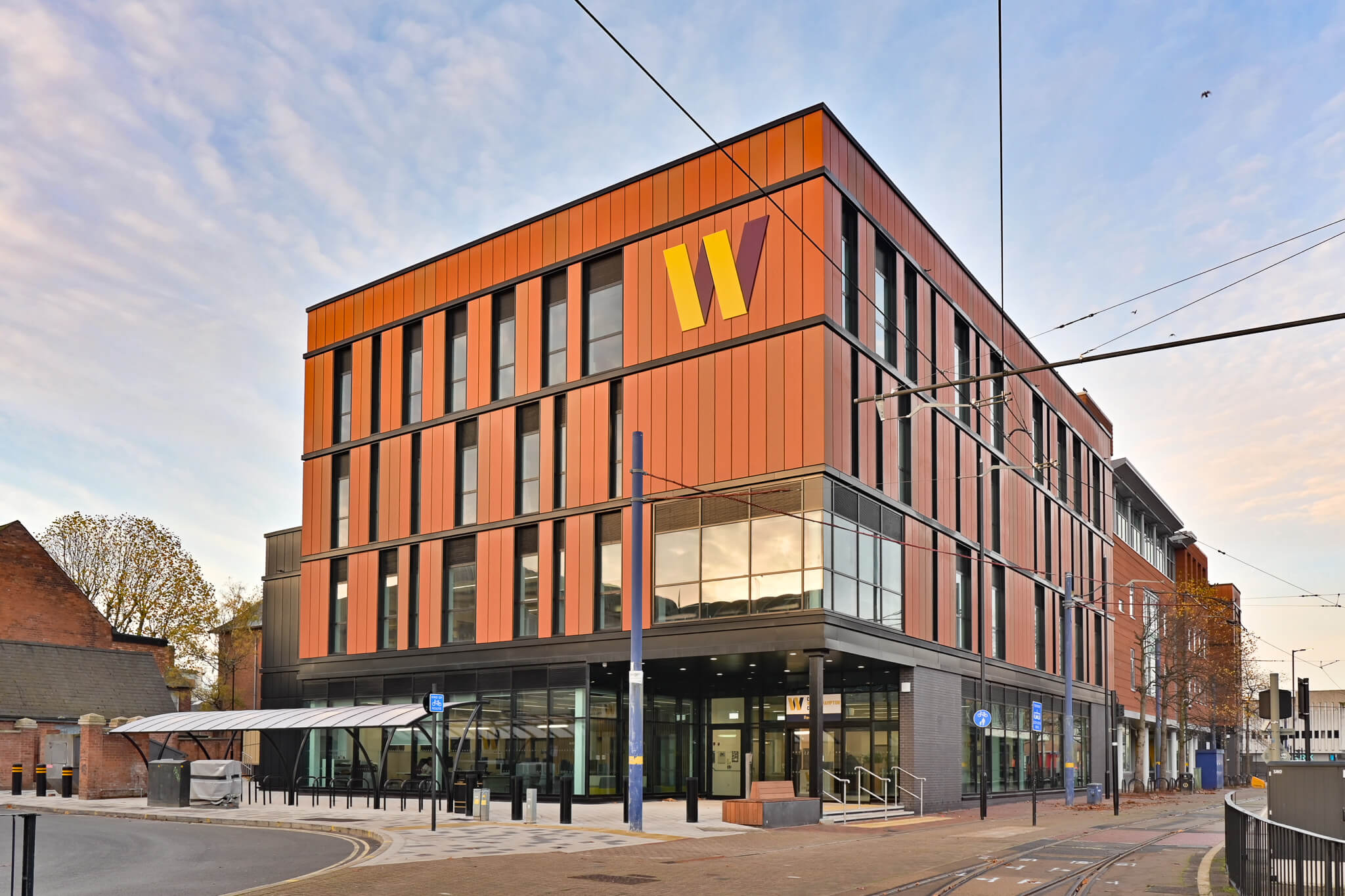
New £61m campus developments
Our new four-storey campus in Wolverhampton city centre is the flagship of the council’s £61 million City Learning Quarter Vision.

State-of-the-art facilities
Study in purpose-built workshops with industry-standard equipment and commercial facilities, gaining real client experience. Enjoy free Wi-Fi, tech-equipped classrooms, and access to laptops, Chromebooks, and tablets—everything you need for success.